Surviving yourself.
Today, we gain insight from a survivor on how to (potentially) understand and save a life.

TW: SUICIDE / SELF HARM
The following interview contains topics and answers that cover the dark and complicated reality that is suicide and self-harm. Please be forewarned before continuing.
Are you a suicide survivor or adjacent to someone who has committed suicide?
I am a suicide survivor. I’ve been self-harm free for going on ten years, and this (2026) is my ninth year being self-harm free.
When did you first attempt to take your life?
I half attempted when I was twelve. I tried to suffocate myself.
And how many attempts have you made in total?
At least 20 times. Some people, when I tell them I’ve tried many times, may perceive it as “bullshitting”. When I was doing that, that wasn’t how I felt. I’ve heard that come up before in conversations or online.
In your own words, how is suicide not as selfish as people perceive it to be?
Suicide is a type of personal battle that, if you haven’t really experienced it, you can’t really judge it as selfish. When you have so much pain inside of you that your environment doesn’t affect your mental state, to simplify it down to being selfish is not just that simple to label it solely as “selfish”.
How can suicide be perceived as selfish?
Suicide is selfish in the sense of not considering the loss of you on the people around you or other people. You don’t think about the gifts that you had to bestow on this Earth.
At what age did you first begin to recognize that you were having suicidal ideations?
I want to say anywhere from ten to twelve, but I started feeling like I had the thought process that my mental state wasn’t where it needed to be when I was around seven. I didn’t have a bad childhood, per se; my parents were very loving. I just think that during my childhood, certain events that were beyond their control contributed to the detriment of my mental health. Our parents’ generation wasn’t necessarily equipped to handle the situation as well as they could have been because they were raised with a mindset of mental fortitude. I remember I asked them to enroll in therapy, and they kind of second-guessed me. I felt like I was being put on the spot when they questioned me about what I know about therapy.
How does a child recognize that their mental stability is not where it needs to be?
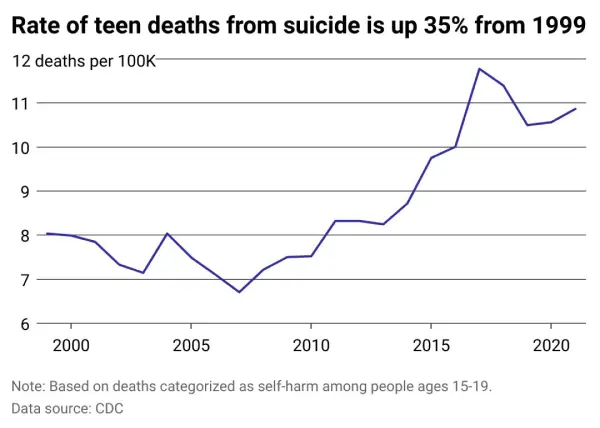
It’s a feeling. I don’t know exactly how I started to feel (like hurting myself) to channel my pain. You keep to yourself, you don’t eat much, and a lot of the time it’s masked by life events like puberty.
Do you feel like a child can be mature enough to make the decision that they don’t want to be on this Earth?
Yes, absolutely. Kids are very sensitive, and they’re constantly absorbing information. If something traumatic happens to you, and you don’t have the tools to regulate yourself, you can easily fall into suicidal ideation and harm yourself.
What were the earliest signs that you felt like people overlooked you when you were first considering committing suicide?
The most memorable was the time I asked for therapy, and my family questioned it sometimes. When you know someone is going through something and has moved past it, that time has allowed them to mentally move on from the situation.
Do you feel like people intentionally overlook people who are presenting suicidal tendencies, or are they just unaware?
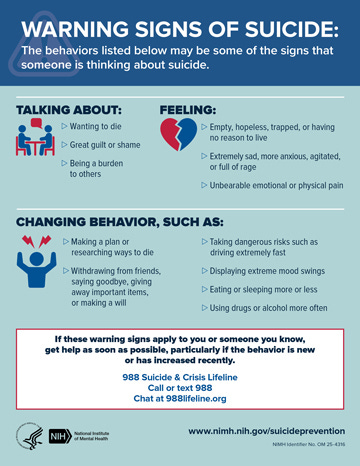
A mixture of both. Sometimes I give people their space to avoid overcrowding them. It’s easy not to want to teeter that line of overstepping a boundary, on the other hand, between checking in and overstepping. Signs are different in everyone, and if you don’t necessarily know someone or are not equipped to handle the signs, you can be unaware.
How can people better handle people who excessively express their ideas?
I told one of my friends how it made me feel in a boundary-setting way. It’s extremely hard to do because it requires you to put yourself in a different state that could ruin your day. You have to set boundaries with people, even if they are going through mental health issues. You have to let me tell you in other ways, rather than just saying “Goodbye.” Contact me if you want, but don’t do it in a way that could almost give me a heart attack.
Did you feel as if you had to convince yourself with your decision, or do you feel as if you knew that you were making the right decision?
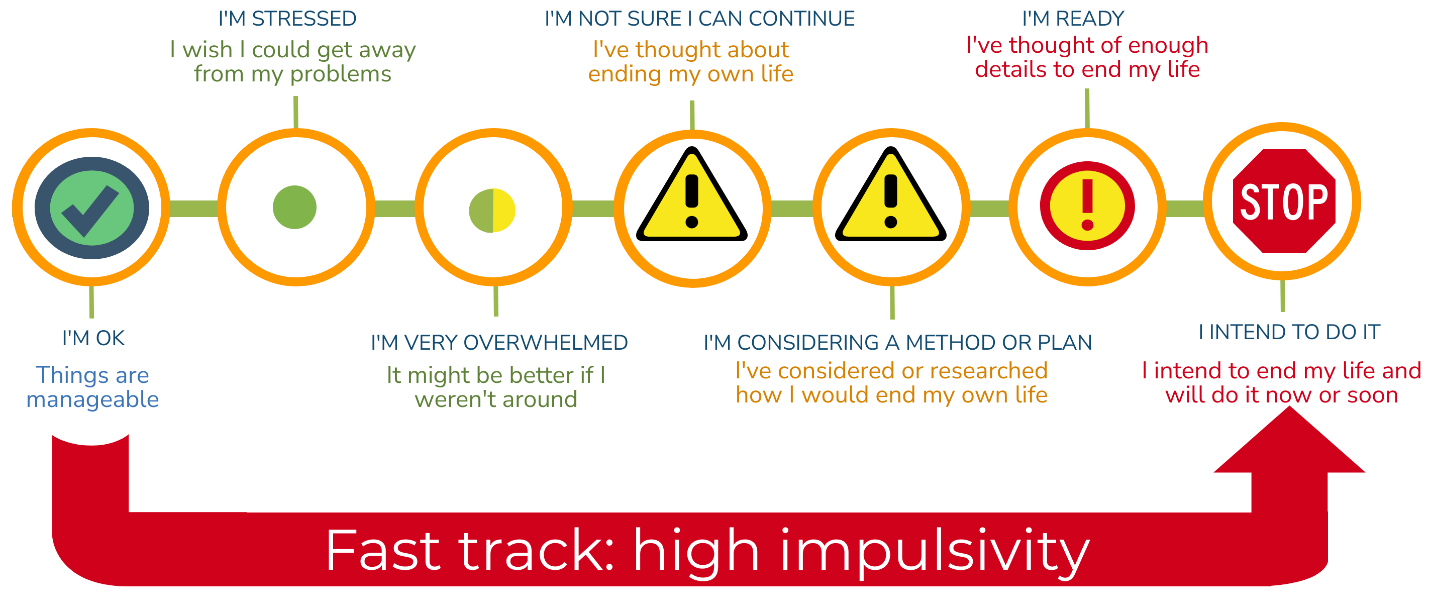
It depends on the time period. At one point, I was certain, but at another, I was unsure. When I got into the depths of it, and I didn’t recognize myself anymore, I was certain. I also had to ask myself if I was being dramatic.
What are the stages that you went through when you became certain of your decision?
I had started becoming more risk-taking and dabbling in things I hadn’t done. I felt as if I were sitting in darkness, and at the time I had graduated and was on my own, everything sort of hit me at once. From there, I feel as if I skipped a lot of the “typical” stages people may use to recognize suicidal tendencies. I was drinking excessively, but I was still doing my homework. I’m naturally ambitious, but I was getting to a point where I was doing so many excessive things that I started failing, and then I started dropping hints to my friends like, “I’m going to miss y’all.” I feel like people knew that I wasn’t okay, but they didn’t know how to help me. We were kids in college, so I don’t hold that against them. I also began cutting myself, too.
What about self-harm becomes addictive?
The release of pain. Hurting myself made me validate the pain that I was experiencing in a way. I used to (at one point) even write words into my skin that I felt about myself.
What was post-harm clarity like for you?
It would itch after a while. It made me feel validated, but not better, because I still had obligations to complete, like homework. It moreso felt as if I just had to move on to the next thing. I would also wonder why I didn’t go all the way.
Was it hard to hide from the people around you that you were harming yourself, or do you feel as if it was quietly known?
It was quietly known. People saw (my marks), and they may choose not to say anything. It’s hard on your scars, unless you’re doing it on places like the inside of your thighs. I remember one time I opened up to someone, and they mentioned that they had noticed. It kind of caught me off guard, because it was more like why mention that you recognize this after the fact, and now what do I do with that information? At my age now, it’s more like understanding because at least that person is seeing you, even if they don’t say anything.
Was it easy for you to acknowledge that you needed help to prevent yourself from self-harming?
No. I didn’t really know what was going to happen, and I thought that I could either deal with it or just continue with my plan to commit suicide. When I chose to seek help, I went to my campus support, but I didn’t know at the time that they would put me on a 72-hour hold.
What entails a 72-hour hold?
You are taken to a hospital, and they either speak with a person or put you on the phone with an evaluator. If the evaluator deems you a potential risk, they present you with the option of either going voluntarily or being court-mandated. I ended up staying at least four or five days. They didn’t let us outside, it’s dirty, and you have a roommate. The media’s perception of what goes on in an asylum isn’t too far off.
Do you feel that hold actually helped you, or did it make you feel worse?
It made me feel worse. I had a mental breakdown while I was there because I felt as if I wasn’t at the same level of mental illness as the people around me. It didn’t come from a place of judgment, but more so from a place of feeling sad. To this day, I still question how we have not come up with better ways to assist the mentally incapacitated.
What were some flaws that you recognized at the facility you were in?
The first was the workers. The people don’t take things seriously, and the setup felt like jail. I didn’t know that the mental hospitals were actually in the hospitals, and the routines were too strict and structured in a sense of similarity to prison (in my opinion). You can’t go outside either, but you can have visitors.
How did you learn to give yourself grace to motivate yourself from attempting on your life again?
I view the suicidal part of me as a whole different book and chapter of my life. I always tell myself that no matter what, life can not get any worse than that. You’ve already gone through the pits of hell. You have equipped yourself to rebuild yourself.
Is there a specific time when an attempt failed, and you felt a sense of relief that you were still alive?
There was one particular time that I had cut myself so deeply that I could see my vein. I could very well have done what I wanted, but I was fixated on it. To me, it felt like I was telling myself, “This is your last chance.” I told someone I had accidentally cut myself, and that I needed help getting patched up, and they did that. I remember being glad it didn’t end like that.
What are some things that people who are non-survivors accidentally do wrong when it comes to supporting someone under this type of duress?
Trying to be too helpful. The best thing for people going through these thoughts is to stick to their normal routines, so they don’t feel like a burden or out of the norm. We don’t have to be corny in a sense of making it obvious we’re hanging out because you want to “check on” you, or that we have to hold hands and constantly talk about it. The last is projecting from the passenger seat. “You have (insert) here, so you shouldn’t feel this way.” You can’t pacify someone; there’s a proper balance. Let them be in the driver’s seat.
What is your biggest fear when it comes to handling the topic?
What scares me the most is that I feel desensitized. If you’ve never been around a survivor, treating a person who has can make them feel like they’re an outsider. I don’t like the fact that I feel like I’m being a little bit of an enabler in a sense. If I put myself in their shoes, I might not have the same reaction as a non-survivor.
What would you say to a seven-year-old child who expresses that they want to take their life?
I think about what I could have told myself. I would tell them that we all feel an innate something within us that we have always had since childhood, and I would bring up that we, as individuals, have a unique ability and gift in our presence, and that everyone should allow themselves to expand into their true potential. I hope they will still understand that.